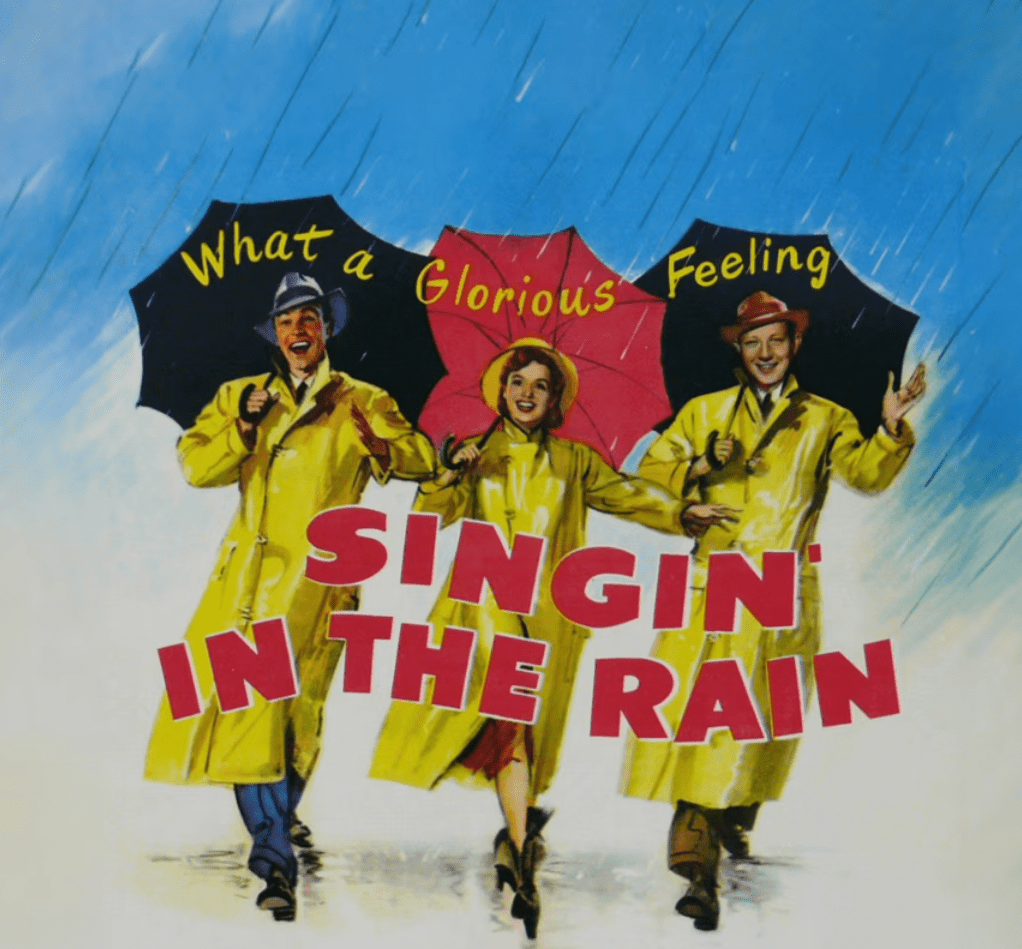
The 1952 MGM film, Singin’ in the Rain is a timeless classic – the original movie musical.
Directed by Stanley Donen and Gene Kelly, this iconic film transports audiences to the era of Hollywood’s golden age. With its memorable characters and unforgettable musical numbers, Singin’ in the Rain continues to captivate viewers of all generations. From Gene Kelly’s compelling choreography to Debbie Reynolds’ charming performance, it exudes a radiant energy, unique to movie musicals.
I hadn’t experienced the joy of Singin’ in the Rain until my first year of college in 2021, during a cinema history class. And recently, at the start of this year, I revisited its magic in a class dedicated to exploring the U.S. film industry. After both viewings, I discovered connections to modern movie musicals and insights into the evolving landscape of the film industry.
It doesn’t shy away from portraying the harsh realities of making it within the film industry, and the adaptations to change. It showcases the issues and struggles of the film industry’s transition into sound. In particular, the scene on the set of The Dueling Cavalier vividly portrays the cast and crew’s relentless efforts to adjust actress’s, Lina Lamont’s microphone, highlighting the hurdles involved in embracing new technology. However, history has proven that overcoming such obstacles and adapting to new technologies ultimately leads to a richer understanding of film as a medium.
This raw, intimate look highlighting the struggles of sound is also featured in La La Land director, Damian Chazelle’s 2022 film, Babylon. In a scene similar to the Lamont microphone debacle, the protagonist Nellie (Margot Robbie), and the crew encounter similar challenges as they navigate the transition into the era of sound. Furthermore, like Singin’ in the Rain, Babylon follows the idea of fame and stardom and the adaptation to the change and advancements within the film industry.
This is a classic Hollywood movie musical that withstands the test of time, its power enduring through the ages. Notably, the familiar tunes Good Mornin’ and Singin’ in the Rain’ are products of this classic, a fact I was unaware of until I watched the film.
More than 70 years after its release in 1952, Singin’ in the Rain continues to maintain prominence and relevance today. The style, themes, and storytelling techniques are carried on and kept alive through modern movie musicals.
In my Let’s Keep Movie Musicals Alive post, I briefly discussed the relationship between Barbie’s “I’m Just Ken” and Singin’ in the Rain’s Dream Ballet. Down to the large sound stage, use of negative space, and vivid colors, the dream ballet featured in Barbie pays homage to Singin’ in the Rain. Without Singin’ in the Rain, would director Great Gerwig have felt compelled to include a large-scale dream ballet in Barbie?
Moreover, my Another Day of Sun: Exploring the Radiance of Old Hollywood in La La Land post references La La Land’s ode to different Old Hollywood elements, including the coloring, and extravagant music numbers – all seen in the Hollywood musical, Singin’ in the Rain. The vibrant colors and costumes, reminiscent of the technicolor era, along with the one-dimensional sets, strikingly resemble the Singin’ in the Rain Broadway Melody sequence.
Now, with directors such as Greta Gerwig and Damien Chazelle, the ‘movie musical’ is back in action with modern twists and intentional nods to Singin’ in the Rain.
Singin’ in the Rain created a legacy to be followed, continuing to inspire and influence generations of filmmakers and audiences alike. Its enduring popularity and cultural impact solidify its status as a timeless classic.
Sources:
 Malia Paganucci
Leave a comment